A municipality has an outdated wastewater lift station. Pumps are about to expire their useful life, while controls need modernization and the access hatch needs to be replaced. The concrete wet well is robust and solid.
Should the station be destroyed? Not necessarily. It is important to determine if the infrastructure is able to support the modern pumping system without compromising capacity in the future and reliability or maintenance access.
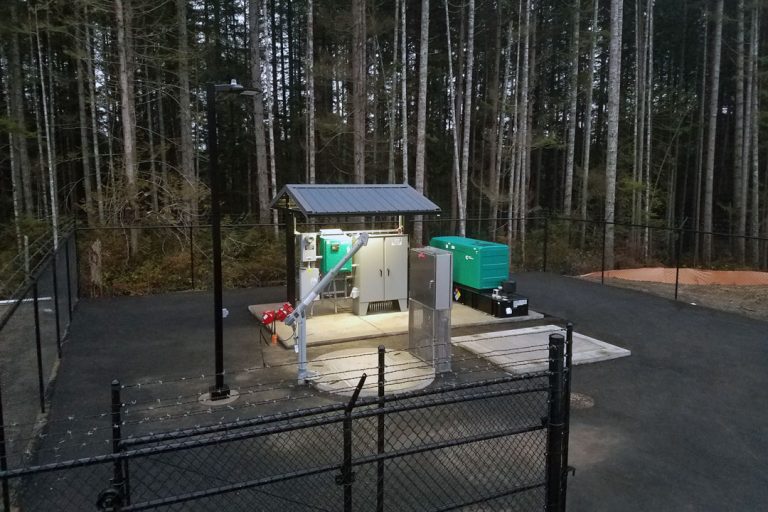
Image credit: romtecutilities.com
A carefully engineered retrofit of the pump station could preserve valuable infrastructure while replacing components which no longer meet the operational standards.
Begin with the Structure that nobody is Trying to Replace.
It is expensive and disruptive to replace the wet-well due to its location in the ground, linked to pipes and is vital for wastewater collection.
Retaining a concrete construction that is functional can reduce the excavation and construction.
However, deterioration near the access hatch can complicate the decision. Romtec Utilities has identified wet-well hatch replacement as a crucial retrofit. Instead of gluing a hatch to cement that is deteriorating replacing the whole top layer might be a more reliable option. This approach can be employed to increase accessibility and enhance the usability of the structure without the need for rebuilding the entire wet well.
The design of a more powerful pump is different
Imagine a neighborhood that has exploded in size from the time of the first lift station installation. The pumps that are in place may no longer provide sufficient capacity to handle the increased flow of wastewater.
A pumping station upgrade could involve higher-horsepower pumps, but equipment selection cannot happen independently of the surrounding system.
Engineers should also consider the hydraulic requirements of the system. This includes flow and total dynamic pressure. A larger pump prior to assessing the requirements could cause more problems than it solves. The ability to plan future capacity in the initial design makes future expansion much easier.
Keep waste water moving during construction
Retrofitting an existing water pump station can present the challenge of a completely new one. As with other equipment replacement projects, the station will have to remain operational during construction.
Contractors continue working and wastewater is still expected to arrive. According to the project it is possible that a temporary bypass pumping system may be required to ensure service is maintained as the old equipment is removed, or new components are added.
Romtec Utilities faced this kind of issue at the Federal Law Enforcement Training Center in Brunswick, Georgia.
The project involved replacing two old wastewater lift stations, while operating the facility. Site-specific engineering packages, replacement systems for packaged equipment, and bypass pumping techniques helped allow for the station’s footprints and operational requirements. This example demonstrates the reasons why the sequence of construction should be considered prior to installation.
In the event that replacing becomes the best option
Not every station is suited to be renovated. If the sewer lift station needs to be replaced because of a severely degraded well, structural issues or significant changes to the needs for hydraulics, it may be better to replace than modify.
In making a final decision, it is essential to think about the structural health of the building, its compatibility with equipment, access to construction, service continuity and the long-term requirements. Romtec Utilities begins retrofit and replacement projects by determining which components will be left and which ones require replacement.
The company develops engineering solutions specific to the location, including preliminary plans as well as budget estimations. Prefabricated components help make installation easier and less time-consuming, as well as reduce construction on site.
The work isn’t over when the pumps begin to run.
Modern lift stations need to be operated as a system in one. Prior to returning it back to regular service, startup testing and commissioning ensures that the controls, pumps, and associated equipment perform according to the specifications of the design.
Operator training and maintenance and operation manuals are equally crucial. Before taking on the responsibility of the station, personnel responsible for maintenance must understand new equipment, procedures and the documentation.
Retrofitting infrastructure can preserve its value, while also eliminating the limitations that prompted modernization.
For facility owners and municipalities it is important to look beyond immediate repairs. The most successful projects integrate new equipment and existing structures. They will maintain the vital services throughout construction and also prepare the pumping systems to run for many years.